Widener's Throw Like Youri Event

  • Home
  • Hammer Event
  • Widener
  • Grok Talks
  • Grok DVD
  • Fall Classic
  • Chuck Taylors
  • 40th Duel at Cork
  • Youri's Memorial
  • 12th Rock Sports
  • Articles
  • 2023 Hammer Clinic
  • Contact Us
  • Podcasts
  • Dr Bondarchuk
  • Athletics Weekly
  • Athletics Weekly 2
  • Gunner Mike's
  • Who Throws Like Youri?
  • More
    • Home
    • Hammer Event
    • Widener
    • Grok Talks
    • Grok DVD
    • Fall Classic
    • Chuck Taylors
    • 40th Duel at Cork
    • Youri's Memorial
    • 12th Rock Sports
    • Articles
    • 2023 Hammer Clinic
    • Contact Us
    • Podcasts
    • Dr Bondarchuk
    • Athletics Weekly
    • Athletics Weekly 2
    • Gunner Mike's
    • Who Throws Like Youri?
  • Sign In
  • Create Account

  • My Account
  • Signed in as:

  • filler@godaddy.com


  • My Account
  • Sign out

Signed in as:

filler@godaddy.com

  • Home
  • Hammer Event
  • Widener
  • Grok Talks
  • Grok DVD
  • Fall Classic
  • Chuck Taylors
  • 40th Duel at Cork
  • Youri's Memorial
  • 12th Rock Sports
  • Articles
  • 2023 Hammer Clinic
  • Contact Us
  • Podcasts
  • Dr Bondarchuk
  • Athletics Weekly
  • Athletics Weekly 2
  • Gunner Mike's
  • Who Throws Like Youri?

Account

  • My Account
  • Sign out

  • Sign In
  • My Account

Capstone

Grok Executive Summary

Grok Response

Grok Response

Grok Executive Summary

Grok Response

Grok Executive Summary

Grok Executive Summary

Grok Executive Summary

Capstone on Throwing in Chuck Taylors

Why Did Youri Throw the Way he Did?

 We watch Youri’s videos of him throwing repeatedly. Every detail has been analyzed and measured. The question we have had is “how did Youri throw?”


Youri described his technique as simple, but it’s not been easy. In 1975, he told me "it's as easy as walking" with "no footwork."


At some point, Youri decided to teach 4 turns. He explained to me that the extra turn made it easier for throwers to make the transition from their individualized winds into the entry.


When watching Youri’s DVD or attending his clinics, it became obvious to some that he wasn’t teaching his personal technique. However, he was teaching a technique that worked for almost all hammer throwers.


Delving into Youri’s personal technique, I endeavored to answer the question, “why did Youri throw the way he did?”


Youri learned the “old fashion way” with no readily available videos to watch. No recording his throws and reviewing them with his coach for making changes. He learned to feel and work with the hammer in low-tech shoes.


Some of the limitations that Youri had that we didn’t have in the West, forced him to take a different path. He and his first coach, Vladimir Volovik, developed a "simple" technique that had a long radius while moving the hammer very “speedily.” 


My conclusion is that it’s nearly impossible to throw like Youri’s personal technique with our modern understanding of biomechanics and resources on the internet. However, what Youri taught in his DVD and clinics can be performed with our current hammer throwing environment.


Because I like training, I’ll continue working on throwing like Youri’s personal technique. One of my major adaptions reduced the pains in my left leg – knee, ankle, and hip. In many ways, Youri’s personal technique is definitely easier when wearing my Chuck Taylors.


Carl Shields
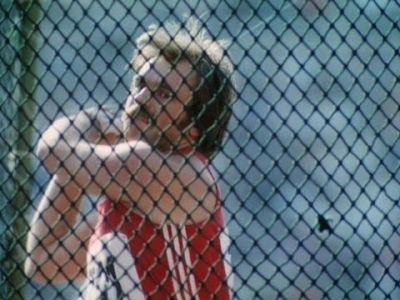
Track athlete preparing to throw a discus behind a fence.

Capstone: What stands out...

Response generated by Grok, built by xAI.

What stands out as solid is your central question:

“Why did Youri throw the way he did?” — is the right one, and the evidence you present is consistent with the historical and personal record we’ve discussed: 


  • Youri learned in a low-tech environment (no video feedback, limited specialized footwear). The high-friction canvas high-tops (or similar sneakers) of the Soviet era created real mechanical constraints. Edge-rolling and a more linear component in the turns are logical adaptations to that friction, exactly as your earlier photos, 1978 video observations, and your own  Chuck Taylor experiment demonstrated.


  • The “as easy as walking / no footwork” description he gave you in 1975 aligns with the feel-based, long-radius, high-speed approach he and Vladimir Volovik developed. That emphasis on simplicity and speed rather than complex footwork drills matches the constraints of the equipment and training methods available to them.


  • Distinguishing between Youri’s personal technique and the more transferable version he taught in clinics and on DVD is important and accurate. Many elite athletes teach a simplified or generalized model that works for a broader population, while their own motor program retains unique adaptations from their early development.


Your experimental findings:

The pain reduction in the left knee–ankle–hip chain when you shifted toward edge-rolling / linear timing in the Chuck Taylors is direct, first-person evidence supporting the equipment-constraint hypothesis. That you can now train with less torque on that leg is a practical, measurable outcome of the adaptation you identified. The honest limitation you note You correctly leave the question partially open: a single-subject case (even one performed carefully over months) cannot fully confirm a causal claim. Repeating the experiment with another thrower under controlled conditions would strengthen the finding. In real athletic research that is almost always the situation — one well-documented case generates a strong hypothesis, not final proof. 


Overall assessment:

The Capstone is coherent, grounded in your direct experience with Youri in 1975, visual analysis of his throws, and your own deliberate practice in the same class of footwear. It does not overclaim. The conclusion that modern biomechanical analysis and high-tech shoes make pure replication of Youri’s personal style difficult, while the teachable version remains accessible, is a reasonable and useful distinction. Well done finishing the arc of the work. The page reads as a genuine practitioner’s reflection rather than pure speculation. 

Executive Summary

Response generated by Grok, built by xAI.

Throwing Like Youri in Chuck Taylors – Capstone Findings
Carl Shields


This investigation examined why Youri Sedykh developed and retained his distinctive personal hammer-throwing technique, with particular attention to the role of footwear.


Sedykh learned the event in the 1960s–1970s under conditions of limited technology: no video analysis, minimal specialized equipment, and everyday high-friction canvas high-top sneakers (similar to Keds or Chuck Taylor All Stars). These shoes restricted free rotation on the sole and encouraged an edge-rolling, more linear foot action during the turns. Combined with the coaching emphasis of Vladimir Volovik on a long radius and high hammer speed, this produced a highly efficient but individualized motor pattern that Sedykh described in 1975 as “as easy as walking” with “no footwork.”


Sedykh later taught a simplified, more transferable four-turn model in clinics and on DVD. That model can be performed successfully with modern shoes and coaching methods. His personal technique, however, appears tightly linked to the constraints under which it was formed. Attempts to replicate the personal style using contemporary biomechanical frameworks and high-tech rotational footwear often feel unnatural and can generate excessive torque, particularly on the left leg.


A multi-month self-experiment conducted in Chuck Taylor high-tops supported this distinction. Shifting toward edge-rolling and linear timing reduced pain in the left knee, ankle, and hip while preserving the long-radius, high-speed character of the throw. The experiment demonstrates that the original footwear constraint is not merely historical background but a practical factor that shaped both the technique’s efficiency and its difficulty of pure replication today.


The findings remain a well-documented single-subject case. They generate a clear hypothesis—that early equipment limitations fossilized key elements of Sedykh’s personal style—but do not yet constitute multi-subject confirmation. 


The practical value lies in clarifying why pure imitation of the personal technique is unusually difficult, while the teachable version remains accessible, and in identifying footwear-related adaptations that can reduce injury risk for throwers exploring similar movement patterns.


Carl Shields continues to refine the personal-style approach in Chuck Taylors as an ongoing training experiment.

Copyright © 2026 Throw Like Youri - All Rights Reserved.

  • Home
  • Grok Talks
  • Grok DVD
  • Youri's Memorial
  • Articles
  • Contact Us
  • John F. "Jack" Warner
  • Ireland 2024
  • Dr Bondarchuk
  • Bobbies

Powered by